What are the new SNAP work requirements?

Adults aged 18–64, who are able to work and do not have dependents under age 14, may receive SNAP benefits for only three months within a three-year period unless they meet the work requirement of at least 20 hours per week (or 80 hours per month).
For current SNAP recipients who are not meeting these requirements, the countable months are February, March, and April. Individuals who do not meet the work requirement or qualify for an exemption will lose eligibility starting in May.
Able-Bodied Adults Without Dependents (ABAWDs) who use all three months of benefits may reapply once they meet the work requirement or when the current three-year period ends on December 31, 2026, at which point a new three-year window begins.
We encourage all neighbors to use the work requirements screener to check for possible exemptions and apply if eligible.
Who Are ABAWDs?
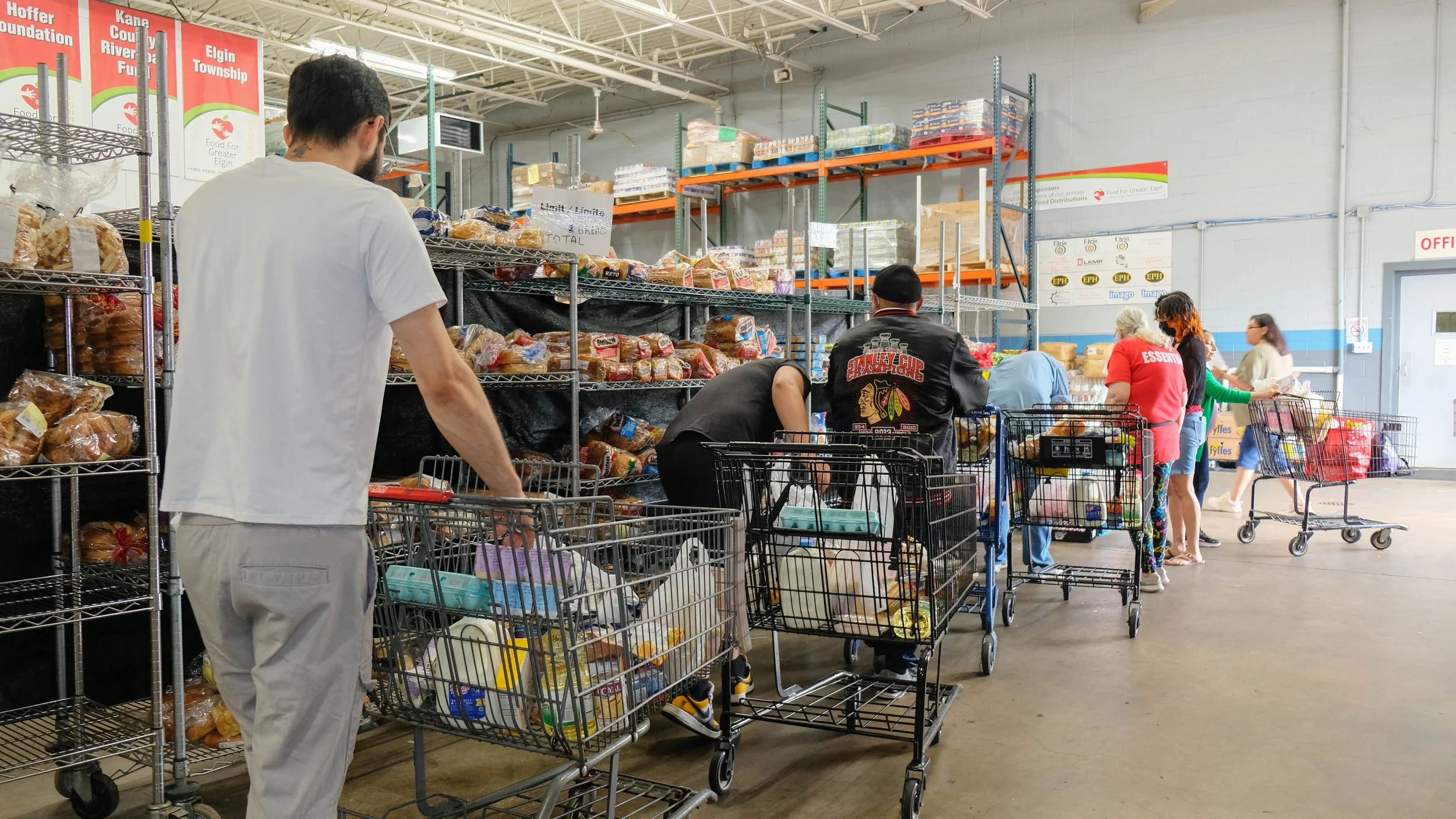
ABAWD are Able-Bodied Adults Without Dependents (ABAWDs).
Because of the SNAP changes, the number of ABAWDs in Illinois has grown significantly—from about 189,000 to approximately 446,000 out of the state’s 1.9 million SNAP recipients, according to the Northern Illinois Food Bank.
The Illinois Department of Human Services (IDHS) estimates that around 340,000 people could lose SNAP benefits once the three-month limit is reached.
Noncitizen Eligibility
H.R. 1 also introduced new restrictions for noncitizens, which would remove SNAP eligibility for asylees, refugees, and humanitarian parolees. Although these changes were scheduled to take effect on December 1, IDHS is not enforcing them at this time.
Illinois has joined a lawsuit challenging these restrictions. If the rules are ultimately implemented, approximately 16,000 SNAP recipients in Illinois would lose access to benefits.
How You Can Help
You can support neighbors affected by these changes by becoming a Monthly Donor.